


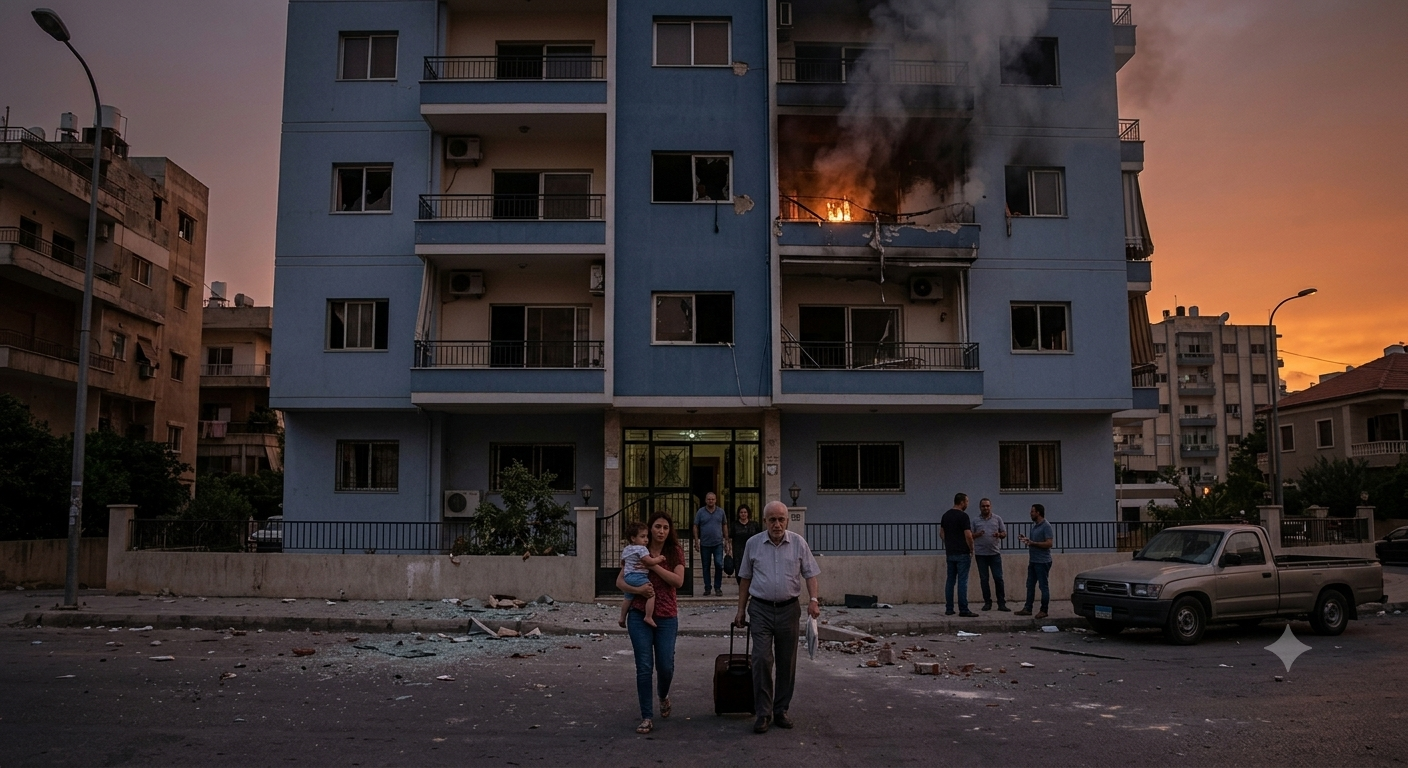
The Israeli military has confirmed that it has struck targets associated with the Iran-backed armed group Hezbollah in Beirut, Lebanon. This development comes at a sensitive time, as Tehran has warned that such actions could potentially derail a pending US-Iran deal aimed at ending the ongoing conflict.
Background to the Conflict
The conflict between Israel and Hezbollah has been longstanding, with both sides engaging in periodic exchanges of fire. Hezbollah, which is backed by Iran, has been a significant player in the regional dynamics, often finding itself at odds with Israel. The group’s military capabilities and its stance against Israel have made it a focal point of concern for the Israeli government.
The recent strikes are part of a broader pattern of escalation between Israel and Hezbollah. Israel has been adamant about its right to defend itself against what it perceives as threats from Hezbollah, while Hezbollah sees itself as a resistance movement against Israeli occupation and aggression.
International Implications
The international community is watching the situation closely, given the potential for the conflict to expand and involve other regional and global players. The United States, in particular, has been engaged in efforts to broker a deal between Iran and Israel, or at least to reduce tensions between them. However, the latest developments threaten to undermine these efforts, as Iran has made it clear that it will not stand idly by if its allies are attacked.
Other countries in the region are also on high alert, aware that any miscalculation could lead to a wider conflict. The European Union and other international organizations have called for calm and restraint, urging all parties to engage in dialogue rather than resort to violence.
Humanitarian Concerns
Beyond the geopolitical implications, the humanitarian situation in Lebanon and surrounding areas is a significant concern. Civilian populations often bear the brunt of conflict, facing displacement, injury, and loss of life. International humanitarian law dictates that all parties to a conflict must distinguish between military targets and civilians, and take all feasible precautions to avoid or minimize harm to civilians and civilian objects.
- The conflict has already resulted in the displacement of thousands of people.
- Humanitarian organizations are working to provide aid, but their efforts are often hindered by the ongoing violence.
- Calls for a ceasefire and a return to negotiations are mounting, as the international community seeks to prevent further suffering.
In conclusion, the situation between Israel and Hezbollah remains tense and volatile. As the world waits to see how events will unfold, one thing is clear: a peaceful resolution to the conflict is imperative, not just for the parties directly involved, but for the stability and security of the entire region.